Beyond the Bucket Collection: How Nottinghamshire's Community Groups Are Funding Themselves Without Grants

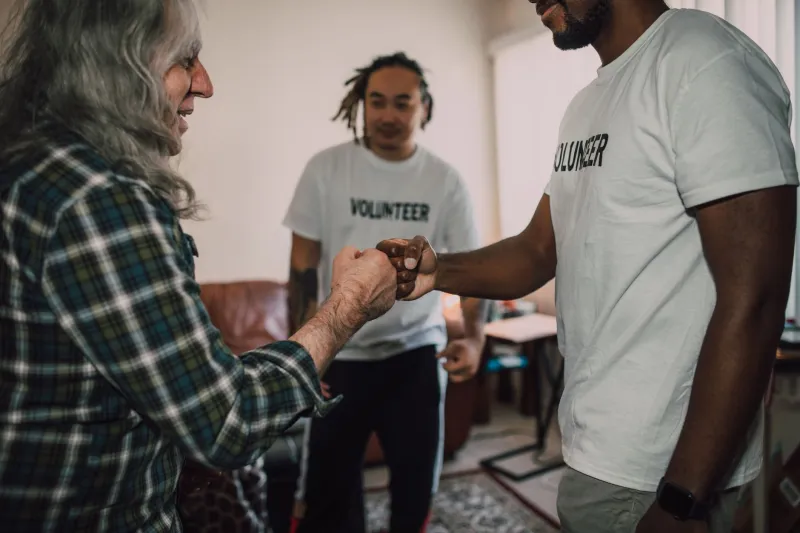
Photo: community group meeting local hall fundraising planning table discussion, via homesight.org
For years, the funding model for community groups in Nottinghamshire looked more or less the same everywhere you went. Apply for a grant. Run the project. Reapply. Hope. Repeat until exhausted or unsuccessful, whichever came first.
That model is under serious strain. Statutory funding has contracted. National lottery pots are more competitive than ever. And the cost of running even the most modest community programme has risen sharply. The groups that are surviving — and in some cases genuinely thriving — are the ones that stopped waiting for someone else to fund them.
The Grant Dependency Problem
It's worth being honest about why grant dependency developed in the first place. For community groups without commercial expertise, without time, and often without any paid staff, grants were simply the most accessible route to income. Fill in a form, demonstrate need, receive funds. It made sense.
The problem is that grants create a particular kind of organisational culture — one oriented around funders' priorities rather than community needs, built on short funding cycles that make long-term planning almost impossible, and structurally dependent on the continued goodwill of bodies whose priorities can shift overnight.
When those bodies change their focus — as many local authority funding streams did following years of budget cuts — groups that had built everything around grants found themselves with nothing underneath them.
What's Actually Working
The alternative funding landscape is messier, more labour-intensive, and considerably more interesting. Across Nottinghamshire, groups are piecing together income from sources that would have seemed unlikely or even inappropriate to their predecessors.
Social enterprise models are probably the most talked-about, and with good reason. A community garden project in the Meadows that started as a volunteer-led growing space now sells produce to local restaurants and runs paid workshops for schools. The income isn't huge, but it's reliable, it's unrestricted, and it doesn't require an annual application process.
A youth arts organisation based in Mansfield moved a portion of its activity into paid creative workshops for corporate teams looking for team-building experiences with a social impact angle. The sessions generate income, raise the organisation's profile with local businesses, and — crucially — create a natural pipeline of corporate donors who've already had a positive experience.
Service trading and skills bartering is less glamorous but surprisingly effective. Several smaller groups in Nottinghamshire have formalised arrangements where they exchange services with other organisations — printing, social media management, venue use, equipment storage — rather than paying cash. It doesn't solve everything, but it reduces outgoings in ways that can make the difference between viable and not.
Peer-to-peer fundraising has moved well beyond sponsored runs. Groups are using platforms like Crowdfunder and GoFundMe not just for one-off campaigns but as ongoing engagement tools, building small communities of regular supporters who give modest amounts monthly. The key, every group that's made it work will tell you, is consistency of communication. People don't give to organisations they've forgotten about.
The Partnership Pivot
Some of the most innovative funding solutions in Nottinghamshire aren't about money at all — at least not directly. They're about relationships.
A community heritage group in Newark partnered with a local estate agent to produce a series of neighbourhood history guides. The estate agent funded the printing and got their branding on the cover; the group got a distribution network and a credible local partner. Both got visibility. Neither had to write a grant application.
A mental health peer support group in Hucknall started offering facilitated listening sessions to small businesses whose staff were struggling with workplace stress. The businesses made a contribution to the group's running costs; the group extended its reach and built relationships outside its usual demographic. It required someone in the group to be willing to have a slightly uncomfortable conversation about money, but once that conversation happened, the model almost ran itself.
These arrangements work best when both parties are honest about what they need. The community group needs income and credibility; the business needs to demonstrate social value and local connection. Nottinghamshire's business networking scene is, if you use it right, full of potential partners who are actively looking for exactly this kind of arrangement.
The Uncomfortable Bit
None of this is easy, and it would be dishonest to pretend otherwise. Moving away from grant dependency requires skills that most community groups haven't been funded to develop: commercial negotiation, financial planning, marketing, and the ability to hold a conversation about money without apologising for it.
It also requires a shift in mindset that some groups find genuinely difficult. There's a long-standing culture in parts of the voluntary sector that treats income generation with mild suspicion — as if charging for things or entering commercial partnerships somehow compromises the purity of the mission. That culture, wherever it persists, is a liability.
Groups that have made the transition successfully tend to share a few characteristics. They have at least one person — a trustee, a volunteer, a staff member — who is comfortable talking about money. They've had an honest conversation about which parts of their work are truly free-at-point-of-use and which parts could sustain a charge without excluding the people who most need them. And they've stopped treating financial sustainability as someone else's problem.
Building Something That Lasts
The funding landscape for community organisations in Nottinghamshire isn't going to get easier in the short term. But the groups that are building diverse, locally-rooted income streams are, quietly, becoming more resilient than any grant-dependent organisation could be.
If your group is at the point where the next funding round feels more like a threat than an opportunity, it might be time to look sideways. Nottinghamshire's community and business networks are closer together than they sometimes appear, and the connections that fund the next phase of your work might already be in the room.
You just have to be willing to have a different kind of conversation.