Running on Empty: The Hidden Crisis Facing Nottinghamshire's Event Volunteers
Running on Empty: The Hidden Crisis Facing Nottinghamshire's Event Volunteers
Ask anyone who runs a community group in Nottinghamshire what keeps them up at night, and chances are it's not funding, not falling membership numbers, and not even the endless battle with village hall booking systems. It's this: who's going to organise the next event when the person who always does it finally says enough?
It's a quiet crisis. Not the sort that makes headlines or triggers emergency council meetings. But talk to group leaders across the county — from Retford to Rushcliffe, from Arnold to Bingham — and you'll hear the same thing, said in different ways. The people who used to make things happen are disappearing. And nobody's quite sure where the next generation of organisers is coming from.
The Weight Behind the Clipboard
On the surface, event organising sounds manageable. Book a venue, sort the catering, send a few emails. But anyone who's actually done it knows that's about ten percent of the job.
Janet, who spent twelve years coordinating fundraising events for a community charity based near Hucknall, describes what eventually wore her down. "It wasn't any one thing. It was the accumulation. Chasing people for RSVPs. Dealing with last-minute cancellations. Being the one everyone called when something went wrong — at seven in the evening, on a weekend, on Christmas Eve once. And doing all of it for free, in your own time, while holding down a full-time job."
She stepped back two years ago. The group hasn't found a replacement. They've scaled back their events calendar significantly as a result.
Janet's story isn't unusual. Across Nottinghamshire's voluntary and community sector, experienced coordinators and administrators are quietly stepping away from roles they've held for years. The reasons are rarely dramatic — it's usually just the slow accumulation of responsibility, under-appreciation, and the sense that the role has quietly expanded far beyond what anyone originally signed up for.
Why the Burnout Is Getting Worse
The pandemic changed things in ways that are still rippling through local groups. During lockdown, many organisations leaned heavily on their most committed volunteers to keep things going digitally — and those same people were then expected to lead the charge when in-person events returned. Some of them never quite recovered their enthusiasm.
At the same time, the cost-of-living squeeze has pushed more people into longer working hours or second jobs, leaving less headspace for voluntary commitments. The pool of people who have both the skills and the available time to organise events has shrunk noticeably.
Marcus, who chairs a sports and social club in the Gedling area, has watched this play out firsthand. "We used to have three or four people who could step in and run our annual dinner or our summer fete. Now it's basically down to one person. And that one person is very aware that if they stop, the events stop."
That kind of single-point-of-failure situation is alarmingly common. When the one person who knows how everything works decides to take a step back, groups don't just lose a volunteer — they lose institutional knowledge, supplier relationships, and years of accumulated know-how that nobody ever thought to write down.
The Succession Planning Problem
Here's the uncomfortable truth: most community groups in Nottinghamshire have no succession plan for their key organisers. It's not laziness or negligence — it's just that nobody expects the person who's always done it to stop. Until they do.
Priya, who runs a cultural events group in Nottingham city centre, started thinking about this after she had to take several months off for health reasons. "I realised that everything was in my head. The contacts, the processes, the knowledge of what worked and what didn't. When I came back, things had fallen through the cracks — not because people didn't care, but because they didn't know what I knew."
She's since started what she calls a "shadow organiser" model, where a newer member of the group joins her for every event, not just to help but to actively learn how decisions get made. "It feels a bit formal for a volunteer group, but honestly, it's the only way to make sure the knowledge gets passed on."
It's a simple idea, and it works. But it requires a certain kind of self-awareness — the willingness to acknowledge that you won't be doing this forever, and to actively invest in making yourself replaceable.
Making the Role More Attractive
Part of the solution is about reframing what event organising actually offers. For younger people especially, the pitch needs to be honest and relevant.
The skills involved in coordinating a community event — project management, stakeholder communication, budget handling, problem-solving under pressure — are genuinely transferable. Several group leaders across Nottinghamshire have started making this case more explicitly when recruiting volunteers, positioning organiser roles as proper professional development opportunities rather than just a way to give back.
There's also something to be said for breaking the role down. Rather than looking for one person to do everything, groups are having more success recruiting small teams with defined responsibilities. One person handles venue logistics. Another manages communications. A third looks after on-the-day coordination. Nobody carries the whole thing alone.
Derek, who organises community events for a residents' association in West Bridgford, switched to this model after his previous lead organiser left. "It's actually better now. More resilient. And people are more likely to say yes when you're asking them to do something specific rather than asking them to take on the whole world."
What Groups Can Do Right Now
If your organisation is starting to feel the strain, there are some practical steps worth considering.
Document everything. Sounds boring, but it matters. A simple shared folder with supplier contacts, venue details, timelines from previous events, and lessons learned can be invaluable when someone new steps in.
Name the role properly. "Event coordinator" sounds more meaningful — and more CV-worthy — than "helping out with events." Language matters when you're trying to attract people who are weighing up how to spend their limited time.
Acknowledge the contribution publicly. Recognition goes a long way. Whether it's a mention in the newsletter, a thank-you at the AGM, or just making sure the wider group knows who made the event happen — it costs nothing and makes people feel genuinely valued.
Start succession conversations early. Don't wait until someone announces they're leaving. Ask your current organiser, gently and genuinely, what it would take to bring someone else up to speed — and start that process now.
The Bigger Picture
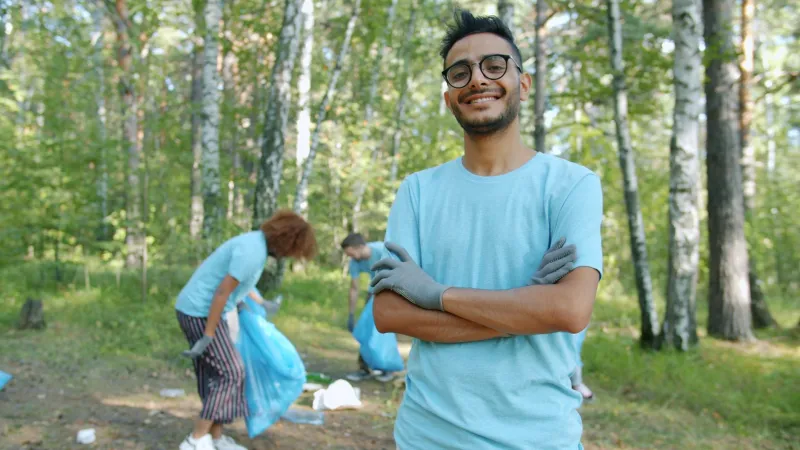
Nottinghamshire's community groups are the connective tissue of local life. They're what makes a neighbourhood feel like a neighbourhood, what brings people together across differences, what fills the gaps that public services can't reach. Events — the summer fetes, the quiz nights, the charity dinners, the community clean-ups — are how those groups make their presence felt.
When the people who organise those events burn out and walk away, something real is lost. Not just the events themselves, but the sense of possibility they represent.
The good news is that the skills exist in Nottinghamshire's communities. The people are out there. They just need to be found, supported, and given a reason to step forward. That starts with the groups themselves being honest about the problem — and then doing something about it before the last clipboard gets put down for good.