More Than a CV Line: How Young Nottinghamshire Volunteers Are Quietly Building Brilliant Careers
The Accidental Career Move
Nobody tells you, when you sign up to help out at a community allotment or agree to run the social media for your local residents' association, that you're also doing something quietly brilliant for your career. Most young volunteers just want to do something useful. The payoff tends to sneak up on them.
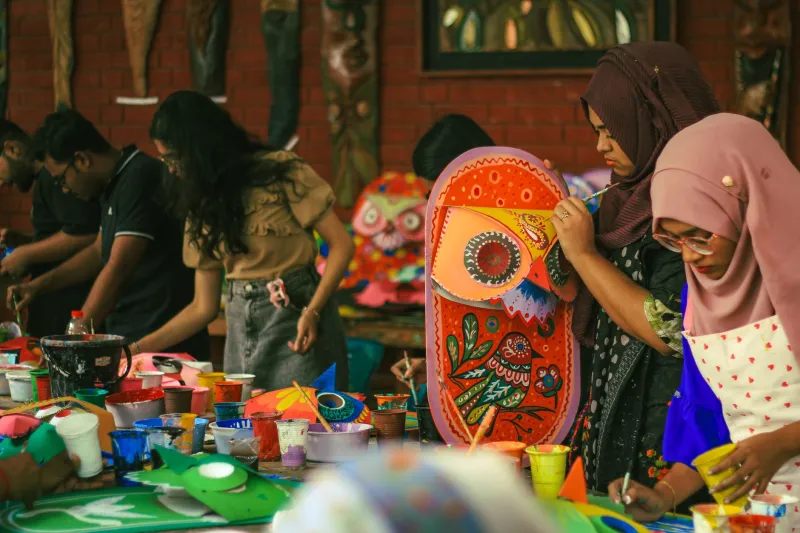
That's certainly how it happened for Priya, 26, who started volunteering with a youth arts project in Arnold when she was nineteen and studying at Nottingham Trent. "I honestly just wanted to fill my weekends with something that felt meaningful," she says. "I had no idea that three years later I'd be running workshops professionally and getting paid for it." The project gave her a stage — quite literally — to develop facilitation skills, manage small budgets, and handle the sort of low-level chaos that no university module ever quite prepares you for. When she graduated, she had a portfolio that spoke louder than her degree.
Priya's story isn't unusual. Across Nottinghamshire, from the market towns of Southwell and Bingham to the suburbs of West Bridgford and Hucknall, young people are finding that community service is functioning as an informal but remarkably effective training ground.
What Volunteering Actually Teaches You
It's worth being specific here, because "gained valuable experience" is one of those phrases that gets lobbed around CVs without meaning very much. So what are young volunteers in Nottinghamshire actually learning?
Take Marcus, 24, who spent two years helping coordinate a food bank in Beeston before landing a logistics role with a regional distribution firm. He'll tell you that nobody taught him more about supply chain thinking than the unpredictable weekly challenge of matching donated goods to community need. "You're dealing with perishables, uncertain donation volumes, dietary requirements, collection slots — it's genuinely complex," he explains. "My employer said in my interview that my volunteering experience was more relevant than candidates with warehouse qualifications."
Then there's Ellie, 22, from Kirkby-in-Ashfield, who joined her local scout group as an assistant leader at seventeen — initially because her younger brother was a scout and the group was short-staffed. Five years on, she's a section leader who's delivered safeguarding training, managed a team of adult volunteers, and organised residential trips for thirty kids at a time. She's now completing a PGCE and credits scouting with giving her classroom management skills that her fellow trainee teachers are still scrambling to develop.
Project management. People skills. Budget handling. Crisis response. Public speaking. Community organising. These aren't soft skills in the dismissive sense — they're exactly what small businesses and larger employers in Nottinghamshire say they struggle to find in entry-level candidates.
The Contacts Nobody Mentions
Beyond skills, there's something else happening in volunteer circles that doesn't get nearly enough attention: networking. Not the slightly awkward, badge-swapping kind that happens at formal business events, but the organic, trust-based kind that develops when people work together on something that genuinely matters.
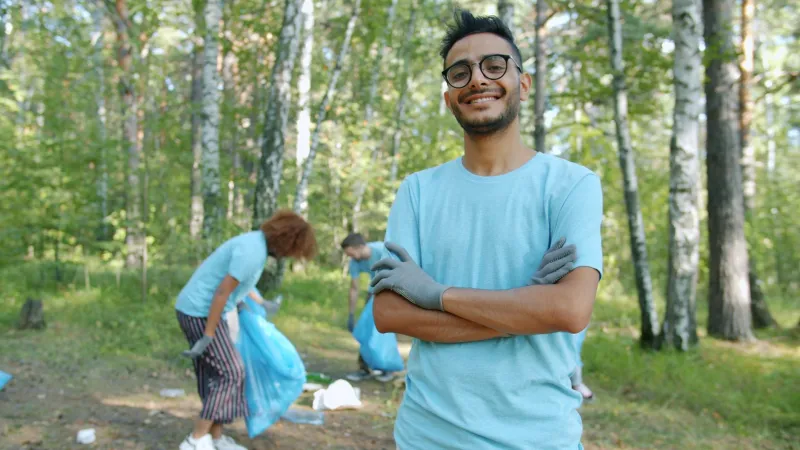
Jamie, 28, started volunteering with a community garden project in Sneinton in his early twenties, mainly because he was between jobs and needed structure. What he didn't expect was to end up working alongside a retired landscape architect, a local councillor, a primary school headteacher, and the owner of a small garden centre — all of whom became, over time, part of his professional network. "I got my first proper landscaping contract through someone I met digging raised beds on a rainy Saturday morning," he says. "No LinkedIn required."
This is something parents, educators, and small business owners in Nottinghamshire would do well to understand. For young people who don't come from well-connected families or didn't attend schools with strong alumni networks, volunteering can be a genuine equaliser. It puts them in rooms — or community halls, or allotment sheds — with people they'd never otherwise meet.
What Employers Are Actually Saying
We spoke to a handful of small business owners across the county who've hired locally in the past couple of years, and the message was consistent: volunteering experience stands out.
"I can teach someone our systems," says the owner of a Nottingham-based events company who asked not to be named. "What I can't teach is someone who knows how to stay calm when things go sideways, or who understands that turning up matters. Volunteers tend to have both."
A recruitment consultant based in the city centre put it even more plainly: "We've had candidates with first-class degrees who can't demonstrate any initiative outside of their studies. And then we've had candidates with a 2:2 who've spent three years running a community group, and honestly, they're more employable. The evidence of what they can actually do is right there."
This isn't to suggest that volunteering replaces formal qualifications — it doesn't, and it shouldn't have to. But it does suggest that Nottinghamshire's young volunteers are building something genuinely valuable alongside whatever else they're doing.
Making the Leap
For young people who are already volunteering and wondering how to make the most of it professionally, a few things seem to make the difference.
First, document everything. Keep records of what you've organised, how many people you've managed, what budgets you've handled. It's easy to underestimate your own experience when you're in the middle of it — harder to dismiss when it's written down clearly.
Second, be deliberate about the connections you make. The people you meet through community work are potential references, collaborators, and champions. Treat those relationships with the same care you'd give a professional contact.
Third, don't be shy about talking it up. There's a tendency among young volunteers to be self-deprecating about what they do — "oh, I just help out at the food bank" or "it's only a scout group." It isn't only anything. Lead with it.
A Resource Nottinghamshire Should Be Proud Of
There's a broader point here that speaks to the kind of county Nottinghamshire is and wants to be. Its community groups — the scout troops, the community gardens, the food banks, the residents' associations, the youth clubs — aren't just doing good work in the present. They're developing the next generation of capable, connected, community-minded professionals.
That's worth celebrating. And if you're a business owner, an educator, or a parent wondering how to help a young person get ahead — point them towards their local group. The career advice might be the best you ever give them.