The Cost Nobody Talks About: What Running a Community Group in Nottinghamshire Really Takes Out of You

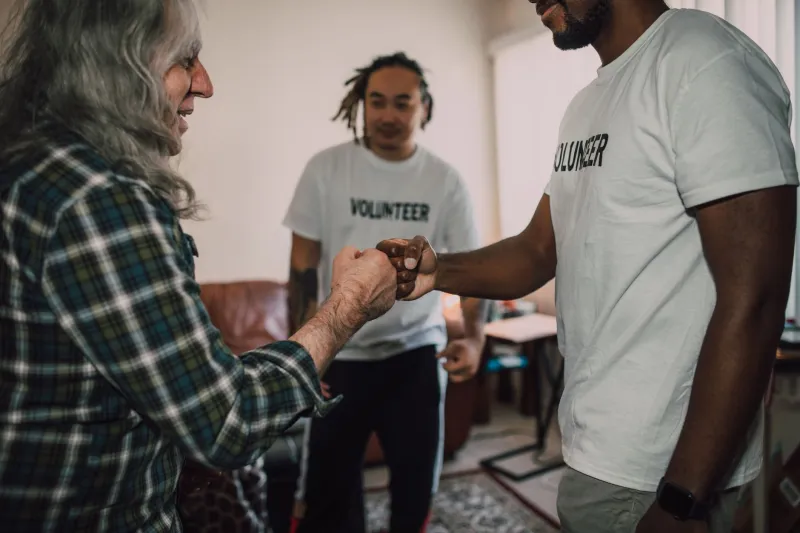
Photo: tired volunteer organiser community meeting UK, via bringatrailer.com
There's a woman in Beeston who hasn't taken a proper holiday in three years. Not because she can't afford one — though the costs of running her local community group have quietly eaten into her savings more than she'd like to admit — but because she genuinely doesn't know who would keep things going if she stepped away.
She's not unusual. Across Nottinghamshire, from the Meadows to Mansfield, from Hucknall to the quieter villages of the Trent Valley, there are hundreds of people just like her. They chair the meetings, write the funding bids, send the emails, chase the replies, set up the chairs, and then go home and lie awake worrying about whether the venue hire is going up again next quarter.
They are, in every meaningful sense, the backbone of local life. And a lot of them are absolutely shattered.
The Invisible Workload
When people imagine community volunteers, they often picture something wholesome and low-stakes — a couple of hours on a Saturday, a friendly face at a stall. The reality for those at the top of local organisations is something else entirely.
Take the coordinator of a wellbeing group in Arnold who asked not to be named. She estimates she puts in between 20 and 30 hours a week on top of her part-time job — none of it paid. That includes grant applications, safeguarding compliance, social media, member support, and what she describes as "basically being an unpaid therapist for half the people who come through the door."
"The emotional weight is the bit nobody prepares you for," she says. "You're not just organising events. You're holding space for people who are really struggling. And then you go home and there's nobody holding space for you."
This is the invisible tax. Not just the out-of-pocket expenses — the printer ink, the mileage, the occasional round of teas that you just quietly cover yourself — but the emotional labour that accumulates, week after week, with no formal recognition and very little relief.
When Passion Becomes Pressure
Most community leaders started out doing this because they loved it. That's the cruel irony of burnout in the voluntary sector: it tends to hit the people who care the most, hardest.
A group facilitator from Kirkby-in-Ashfield describes the shift clearly. "There was a point where I was dreading the meetings I used to look forward to. I'd be sitting there thinking, I need to find a treasurer, I need to reply to that council email, I need to sort the insurance renewal — and meanwhile someone's talking about the thing I actually started this group to do, and I can barely concentrate."
He stepped back from his role last year. The group has since struggled to find a replacement willing to take on the full weight of the role. This is a pattern playing out across the county — experienced, capable leaders burning out and leaving gaps that are genuinely hard to fill.
The Structural Problems Underneath
Burnout in this context isn't just a personal failing or a matter of needing to say no more often. It's rooted in structural problems that community groups across Nottinghamshire share.
Funding that doesn't cover the real costs. Many grants pay for activities but not for the administrative time it takes to run them. The result is that organisers subsidise their own groups — with time, money, and energy — in ways that are simply unsustainable.
No succession planning. It's rare to find a local group with a genuine plan for what happens if their key person leaves. Leadership tends to be concentrated in one or two individuals, meaning the group's survival is entirely dependent on their continued willingness to carry on.
Isolation at the top. There's a particular loneliness to being the person in charge. Who do you complain to when things are hard? You're supposed to be the one with the answers. Many organisers describe feeling that they have no peers — no one who truly understands what the role involves.
What Could Actually Help
None of this is inevitable. There are practical steps that could make a real difference, and some groups in Nottinghamshire are already trying them.
Sharing leadership more deliberately — distributing responsibilities across a small committee rather than letting everything funnel through one person — makes groups more resilient and reduces individual burden. It also makes them easier to join as a leader, which helps with that succession problem.
Peer support networks for organisers themselves, separate from the groups they run, are another underused resource. A handful of community hubs across the county have started informal monthly gatherings specifically for group leaders — not to talk about their groups, but to talk about how they're doing. The feedback has been quietly transformative.
And funding bodies need to have an honest conversation about what they're actually asking of voluntary organisations. If a grant requires 40 hours of administration to apply for and deliver, but only funds the visible programme activity, something has gone badly wrong.
Holding On to the People Who Hold Things Together
Nottinghamshire's community groups are genuinely extraordinary. The range of what's on offer — the support networks, the creative collectives, the sports clubs, the neighbourhood forums — reflects a region with a deep instinct for looking after its own.
But that instinct is being quietly depleted. Every experienced organiser who steps back takes with them knowledge, relationships, and institutional memory that takes years to rebuild. And the people most likely to replace them are often put off before they even start by the sheer scale of what's expected.
The conversation Nottinghamshire needs to have isn't just about celebrating its volunteers — it's about what we're actually asking of them, and whether we're making it possible for them to keep going.
Because right now, for too many of the people keeping this county connected, the answer is: barely.