Two Generations, One Room, Zero Connection: Fixing the Professional Gap That's Costing Nottinghamshire
The Meeting That Didn't Quite Happen
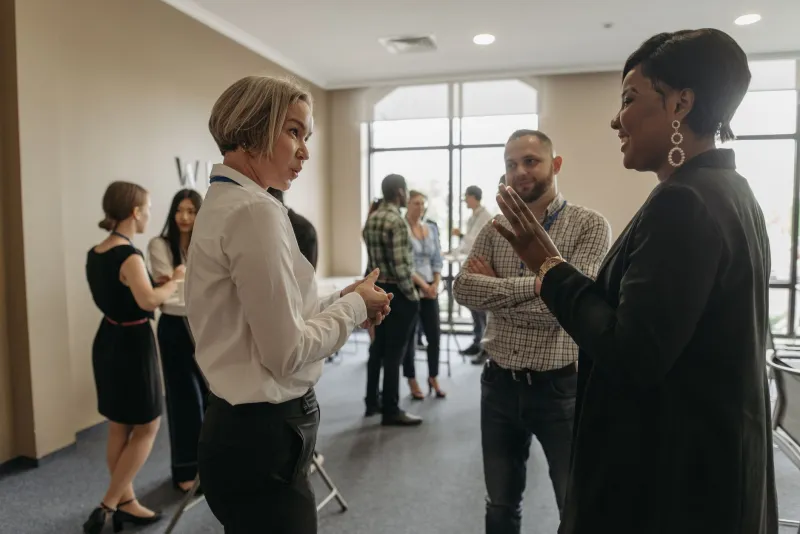
Imagine two people at a Nottinghamshire networking event. One is in their late fifties — thirty years of sector experience, a strong local reputation, a contact book that most people in the room would envy. The other is in their mid-twenties — sharp, digitally fluent, full of ideas, and quietly wondering whether anyone here has anything useful to say to them.
They might exchange cards. They might have a polite three-minute conversation. They probably won't meet again.
This isn't a story about rudeness or indifference. It's a story about structure — specifically, the lack of it. Nottinghamshire's professional landscape is rich in both established expertise and emerging energy, but the mechanisms for connecting the two are surprisingly thin. And the cost of that gap is real, even if it's rarely measured.
Why Traditional Mentorship Keeps Disappointing
The standard response to intergenerational disconnect in professional settings is mentorship. Match an experienced professional with someone earlier in their career, let the wisdom flow downward, job done. It's a model with genuine value — but also genuine limitations, and those limitations are increasingly apparent.
For a start, formal mentorship programmes often struggle to get off the ground in the first place. They require significant coordination, careful matching, and ongoing administration. Many well-intentioned schemes in the East Midlands have launched with enthusiasm and quietly stalled within a year, leaving both mentors and mentees frustrated.
But there's a deeper problem. The traditional mentorship model is fundamentally hierarchical — it assumes that value flows one way, from older to younger, from established to emerging. And that assumption increasingly doesn't hold.
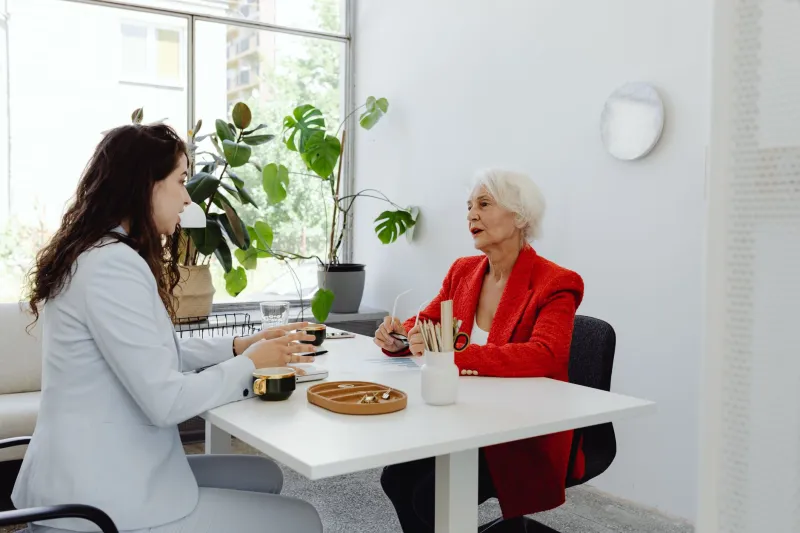
"I've had mentors who were brilliant," says Jade, a 27-year-old digital marketing professional based in Nottingham. "But I've also sat in mentoring sessions where I knew more about the actual landscape of my industry than the person advising me. They had wisdom about careers and relationships and navigating organisations. But they were advising me on tactics they hadn't used in a decade. It felt a bit awkward for both of us."
Her experience is common. The pace of change in many sectors means that the expertise most relevant to someone building a career in 2025 isn't always held by the person who built their career in 1995 — and pretending otherwise does a disservice to everyone.
The Communication Gap Is Real (And Overstated)
It's tempting to reach for generational stereotypes here — the tech-averse boomer, the attention-span-challenged Gen Z — but the professionals we spoke to were largely dismissive of that framing. "The communication differences are real but they're not insurmountable," says David, a 61-year-old business consultant who mentors younger professionals in Nottinghamshire. "What's actually harder is the difference in what each generation thinks the relationship is for."
That's a sharper observation. Younger professionals, broadly speaking, tend to want practical, applied support — introductions, feedback on specific work, help navigating a particular situation. Older professionals often bring a longer-horizon perspective — career architecture, resilience, the kind of pattern recognition that only comes from having seen things go wrong multiple times.
Neither instinct is wrong. But when neither party is explicit about what they're looking for, the relationship tends to drift into polite but unproductive territory. Both sides disengage, and the conclusion drawn — that cross-generational connection just doesn't really work — is wrong, but understandable.
What Forward-Thinking Organisations Are Doing Differently
A small number of Nottinghamshire groups have started redesigning their approach to cross-generational engagement, with genuinely promising results. What they share is a rejection of the one-directional knowledge transfer model in favour of something more reciprocal.
One professional development network in the city has introduced what it calls 'reverse briefings' — structured sessions where younger members present on a topic relevant to their sector (AI tools, platform shifts, emerging consumer behaviours) to an audience of more established professionals, who then respond with contextual knowledge from their own experience. The format explicitly positions both parties as having something to offer.
"The response has been remarkable," says the group's organiser. "Older members say they leave feeling genuinely energised rather than patronised. Younger members say it's the first professional event where they felt like their knowledge was actually valued rather than just tolerated."
Elsewhere, a Nottinghamshire enterprise support organisation has moved away from formal mentorship matching entirely, replacing it with small, facilitated peer groups that deliberately mix career stages. The groups meet monthly for structured problem-solving sessions — each member brings a current challenge, the group works on it together. There's no hierarchy built into the format.
"What we found," says one of the facilitators, "is that the age mix actually produces better thinking. Someone with thirty years of experience spots the strategic risk. Someone two years into their career spots the trend everyone else has missed. Neither would have got there alone."
The Structural Changes That Actually Help
Beyond programme design, the organisations making progress on cross-generational connection tend to have made a few structural commitments that are worth noting.
They've reduced the cost of participation for people early in their careers — recognising that a £50 event ticket is a different proposition for a 24-year-old freelancer than for a senior partner, and that pricing people out at the start of their careers has long-term consequences for the diversity of the network.
They've also been intentional about representation in leadership. A committee or board that skews heavily toward one age group will, almost inevitably, design events and formats that reflect that group's preferences. Getting younger voices into programme planning — not as tokens, but as genuine decision-makers — changes what gets created.
And they've been willing to name the awkwardness explicitly. Cross-generational networking can feel strange precisely because most of our social structures keep generations fairly separate. Acknowledging that upfront, and building in enough structure to carry people through the initial discomfort, makes a meaningful difference.
The Opportunity That's Still Sitting There
Nottinghamshire's professional community is, in many ways, well-placed for this. It's small enough that people can actually know each other across career stages; large enough to have real depth of expertise across sectors. The ingredients for genuinely productive cross-generational exchange are present.
What's been missing is the intentional architecture to make it happen. The groups building that architecture — slowly, imperfectly, but seriously — are creating something more valuable than a networking event. They're building the kind of professional community where knowledge actually moves, in both directions, and where the next generation doesn't have to learn everything the hard way.
That's worth working toward.