When the Doors Close: What Nottinghamshire's Community Groups Lose When They Lose Their Home
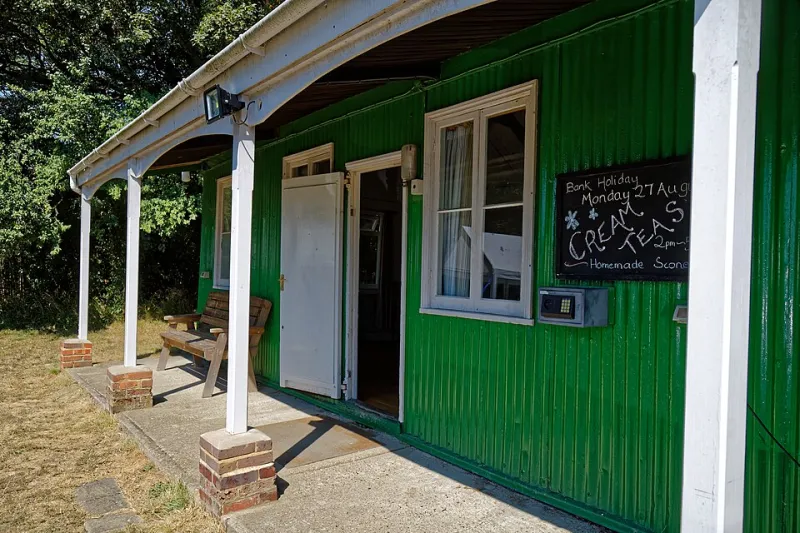
Photo: Acabashi, CC BY-SA 4.0, via Wikimedia Commons
There's a moment that volunteers and group organisers across Nottinghamshire know all too well. You get the email, or the phone call, or the letter slipped under the door of the room you've met in for years. The venue is closing. The rent is going up beyond what you can afford. The building is being sold, converted, redeveloped. You have until the end of the month, or the end of the quarter if you're lucky.
And then begins a scramble that, on the surface, looks like a logistical problem. Find a new space. Inform the members. Update the website. In reality, it's something far more disruptive than that.
More Than a Room
A meeting space is never just a meeting space. For a community group, it's an address — the place people know to come, the pin on the map that makes the group legible to new members. It's the backdrop to years of shared history. It's the room where certain conversations happened, where certain relationships formed, where the group developed its particular culture and rhythm.
When that disappears, the group doesn't just lose a venue. It loses a piece of its identity.
This might sound sentimental, but the practical consequences are very real. Members who joined partly because the location worked for them — close to home, on the bus route, near where they work — may find that a new venue simply doesn't fit their lives. Attendance drops. Then engagement drops. Then, sometimes, the group itself quietly winds down.
What's Driving the Losses
Across Nottinghamshire, community groups are losing their meeting places for a cluster of interconnected reasons.
Pub closures have been particularly damaging. Many groups — quiz nights and book clubs, yes, but also business networks and professional meetups — relied on the function room of a local pub as an affordable, accessible, informal venue. As pubs have closed across the county, from village locals in the Newark area to city-fringe boozers in Nottingham, those spaces have gone with them.
Community centres and church halls, meanwhile, face their own pressures. Maintenance costs, energy bills, and the challenge of keeping ageing buildings compliant with modern standards have pushed many to increase hire rates significantly — or to close outright. For groups operating on tight or non-existent budgets, even modest rent increases can be terminal.
Then there's the broader commercial property market. As parts of Nottinghamshire have attracted investment and development, spaces that were once cheap or freely available have become attractive to higher-paying tenants. The arts space, the community kitchen, the meeting room above the old shop — these get absorbed into the market, and the groups that depended on them have to find somewhere else.
The Splintering Effect
What happens when a group loses its home is rarely a clean transition. More often, it's a splintering.
Some members follow the group to its new location. Others drift away, telling themselves they'll rejoin when things settle down. A few decide this is a good moment to start something different, taking their energy and their contacts elsewhere. And the social glue that the shared space provided — the pre-meeting catch-ups, the lingering conversations after, the sense of ritual and belonging that comes from returning to the same place — doesn't automatically reassemble itself somewhere new.
One Nottinghamshire-based networking group, which had met in the same city-centre venue for several years, described the aftermath of losing their space as "like trying to restart a fire with damp wood." They found a new venue. They sent the emails. The numbers came back — but slowly, and not fully. Some of the most committed members, people who'd been there from the beginning, never returned. The new venue was fine. It just wasn't theirs.
This kind of attrition is hard to quantify but easy to observe. Groups that relocate typically see a dip in attendance that can take a year or more to recover from — if it recovers at all.
The Creative Responses
It would be wrong to tell this story as pure loss. Some Nottinghamshire groups have responded to displacement with real ingenuity, and their approaches are worth knowing about.
Rotating venue models have worked for some. Rather than anchoring to a single space, groups meet at different locations each month — a member's business premises one time, a café that offers a private room the next, a library meeting space the time after. It requires more organisation, but it also builds resilience. No single closure can derail the group, and the variety can actually energise members.
Others have leaned into hybrid formats, combining in-person gatherings with online sessions in ways that reduce their dependence on any single physical space. The pandemic, for all its damage, demonstrated that community can persist without a fixed location — and some groups have carried that lesson forward deliberately.
There's also been growing interest in community ownership models. Groups in several parts of Nottinghamshire have explored whether they can collectively acquire or lease a space rather than remaining at the mercy of a private landlord or an institution's changing priorities. It's a significant undertaking, but for established groups with a stable membership base, it's a way of taking control.
Council and local authority spaces are another avenue — underused rooms in libraries, leisure centres, and civic buildings that are sometimes available for community use at low or no cost. These aren't always well-publicised, and navigating the booking systems can be its own challenge, but they exist.
What Needs to Happen
The loss of meeting spaces is a systemic issue, not a series of individual misfortunes. It requires responses at multiple levels.
Local authorities and planning bodies could do more to protect community-use spaces within development agreements — requiring that new developments include accessible, affordable community rooms rather than treating this as an optional extra. Asset transfer schemes, which allow community groups to take on management of publicly owned buildings, have worked in some areas and could be expanded.
Funders and support organisations could recognise venue costs as legitimate infrastructure spending, not just an inconvenient line in a budget. A group that can't meet is a group that can't function, regardless of how strong its programme or its membership.
And communities themselves can advocate for the spaces they value before they're gone — rather than after, when it's too late.
At Notts Groups, we see this playing out across the county's networks regularly. The groups that thrive are the ones that treat their physical home as something worth protecting and planning for — not something they'll figure out when the notice lands. Because by then, the damage is often already done.
A community without a place to gather is still a community. But it's a harder one to hold together.