Neighbourhood Pride: How Nottinghamshire's Communities Are Writing Their Own Stories
Neighbourhood Pride: How Nottinghamshire's Communities Are Writing Their Own Stories
There's a particular kind of energy you feel when a place knows who it is. It's in the way a high street holds together, the way residents talk about their area with genuine affection, the way independent businesses cluster and support one another rather than just coexist. It's not something you can manufacture from the top down — it has to grow from within.
Across Nottinghamshire right now, that kind of energy is very much present. From the creative density of the Lace Market to the quiet reinvention happening in market towns like Newark-on-Trent, communities are increasingly taking the lead on shaping their own identities. And while the challenges are real — economic pressure, demographic change, the long shadow of high street decline — the stories emerging from these places are genuinely encouraging.
The Lace Market: History as a Living Asset
Few neighbourhoods in the East Midlands carry as much historical weight as Nottingham's Lace Market. Once the global centre of the lace trade, its Victorian warehouses and cobbled streets have been repurposed over decades into one of the city's most distinctive quarters — home to independent restaurants, design studios, galleries, and creative agencies.
But what makes the Lace Market interesting isn't just its architecture. It's the way the community that has formed around it treats its heritage as something dynamic rather than merely decorative. Resident and business groups in the area have been active in shaping planning conversations, pushing back against developments that feel out of character, and championing the kind of independent, small-scale businesses that give the neighbourhood its texture.
The Creative Quarter Company, which has long been involved in the area's development, has worked to make the Lace Market and Hockley a destination rather than just a postcode — hosting events, supporting new businesses, and building the kind of narrative that draws people in. It's a model that other parts of the county are increasingly looking to for inspiration.
The honest challenge? Gentrification pressures are real. As the area becomes more desirable, the independent businesses that made it attractive in the first place can find themselves priced out. Keeping that balance — welcoming investment while protecting character — is an ongoing negotiation, not a solved problem.
Arnold: Redefining a Suburb on Its Own Terms
Arnold sometimes gets short shrift in conversations about Nottinghamshire's more vibrant communities. Situated just north of the city, it's often described in the kind of vague terms that get applied to many suburban towns — convenient, residential, perfectly fine. But that framing doesn't do justice to what's actually been happening there.
Over recent years, a combination of resident associations, local traders, and community-led initiatives has been quietly working to sharpen Arnold's sense of self. The town centre has seen renewed interest from independent operators, and community events — from markets to cultural gatherings — have started to build the kind of regular rhythm that makes a place feel genuinely alive.
What's particularly notable in Arnold is the role of digital community spaces in amplifying that energy. Local Facebook groups and neighbourhood platforms have become genuine hubs for organising, sharing, and debating what the town should look like — with thousands of residents actively engaged in conversations about everything from planning applications to litter-picking rotas. It's unglamorous, perhaps, but it's exactly the kind of civic participation that sustains a community identity over time.
The challenge for Arnold — as for many suburban towns — is attracting sustained investment without losing the approachability and affordability that make it a genuinely good place to live and do business.
Newark-on-Trent: A Market Town Finding Its Footing
Newark is one of those places that rewards a closer look. A historic market town with a castle, a strong independent retail tradition, and excellent transport links, it has the raw ingredients for a thriving community identity. But like many similarly-sized towns across the East Midlands, it has had to work hard in recent years to hold its own against the gravitational pull of larger retail centres and the ongoing shift to online shopping.
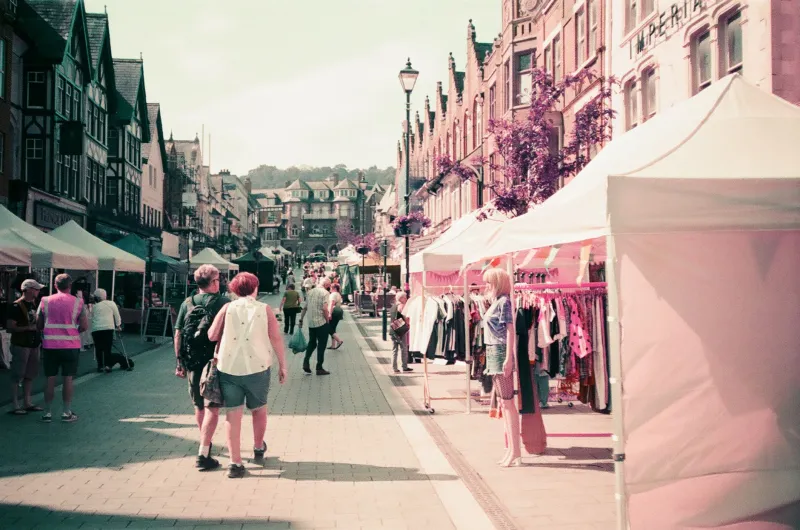
What's emerged in response is a genuinely community-minded approach to economic resilience. Newark's Business Improvement District has been active in coordinating events, supporting traders, and making the case for the town as a destination worth visiting. The regular markets — including the antiques and collectables trade for which the town is nationally known — draw visitors from across the region and beyond, giving independent businesses a platform that purely digital competitors simply can't replicate.
Community groups in Newark have also been effective at linking the town's heritage — its Civil War history, its position on the Great North Road — to a contemporary identity that feels relevant rather than nostalgic. That's a harder trick to pull off than it sounds, and it speaks to the quality of the people involved in shaping the narrative.
The honest picture, though, is mixed. Vacancy rates on some parts of the high street remain a concern, and the town faces the same structural pressures as every comparable market town in England. The community energy is real — but it needs sustained support from local authority partners and private investment to fully translate into lasting economic resilience.
What Makes Hyper-Local Identity Building Actually Work?
Looking across these case studies — and at the broader pattern of community development happening in places like Beeston, Hucknall, Bingham, and Southwell — a few common threads emerge.
Anchor institutions matter. Whether it's a well-run community centre, an active residents' association, or a business group with genuine credibility, communities with strong anchor organisations tend to hold together better when things get difficult. These groups provide continuity, institutional memory, and a focal point for collective action.
Stories need telling. Communities that know and celebrate their own history — and can connect that history to a contemporary identity — have a significant advantage. The Lace Market's success isn't just about its buildings; it's about the story it tells about itself. Every neighbourhood has a story worth telling.
Collaboration beats competition. The most effective community identities in Nottinghamshire are built on a spirit of genuine collaboration between residents, businesses, and local organisations. When those groups are pulling in the same direction, the results can be remarkable.
Small things add up. A well-maintained public space, a regular community event, a local business that genuinely invests in its neighbourhood — none of these things are transformative on their own. But over time, they accumulate into something that feels like a real sense of place.
The Bigger Picture
There's a broader point worth making here. At a time when national conversations about community and belonging can feel rather fraught, Nottinghamshire's neighbourhoods offer a more grounded and optimistic perspective. People across the county are doing the quiet, unglamorous work of building places worth living in — and they're doing it largely without waiting for permission.
For a platform like Notts Groups, that's exactly the kind of energy we want to support and connect. Because the more these communities can learn from one another — sharing what's working, being honest about what isn't — the stronger the whole county becomes.
The laneways and lace warehouses, the market squares and suburban high streets: they're all part of the same story. And it's one that's very much still being written.